How to Get Your Website Recommended by AI Search in 2026
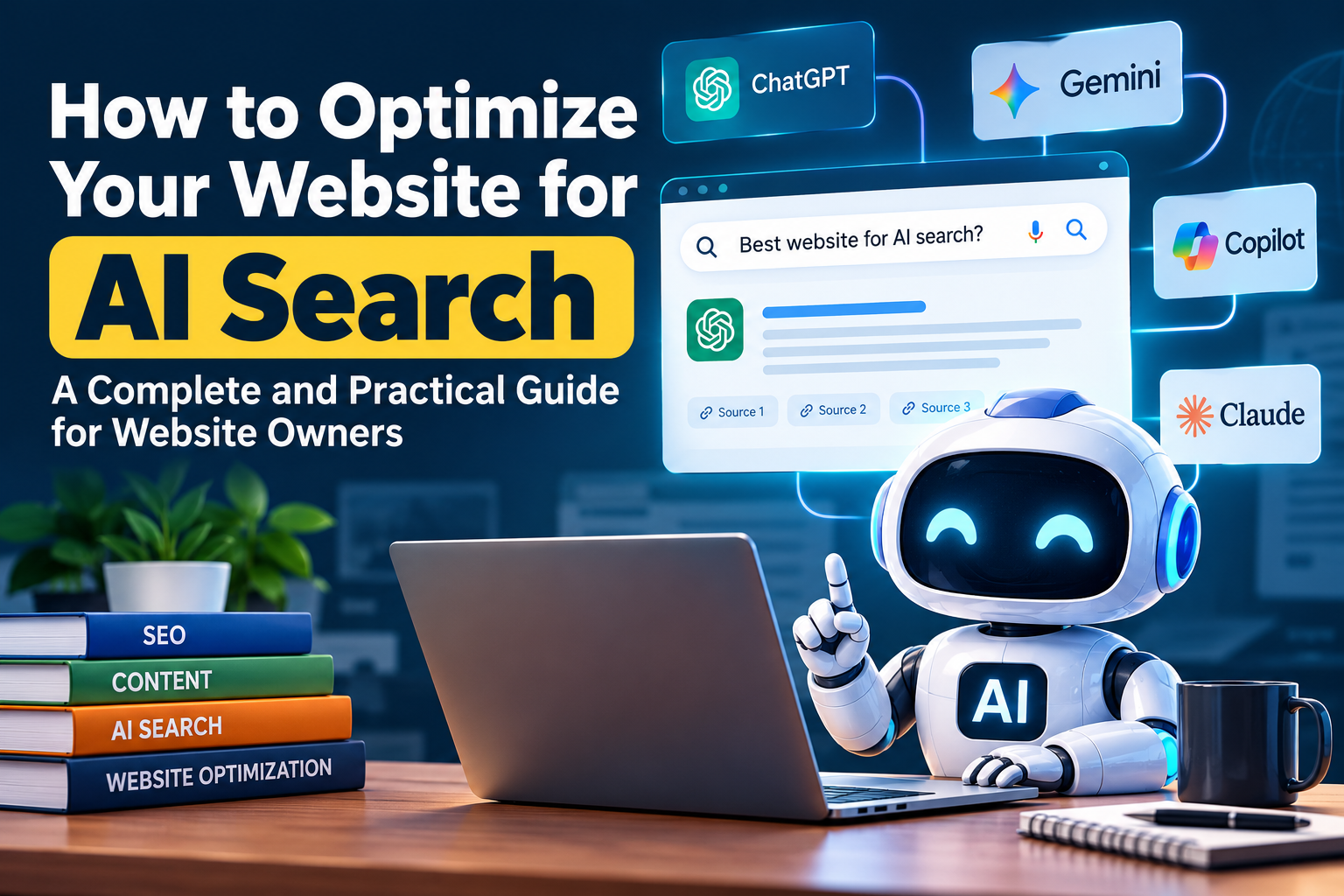
Artificial intelligence is changing the way people discover information online. Instead of only showing a traditional list of search results, modern search engines can now generate answers, summarize information, and recommend websites as sources.
This change is creating a new opportunity for website owners. Ranking on Google is still important, but businesses also need to understand how their content can become visible in AI-powered search experiences such as AI Overviews and AI Mode.
AI search optimization focuses on making website content clear, useful, trustworthy, and easy for search systems to understand. Strong content structure, relevant information, technical SEO, and clear answers can all contribute to better visibility across modern search experiences.
In this guide, we’ll explain how AI search works, what makes content easier for AI systems to understand, and the practical steps businesses can take to increase their chances of being discovered and cited in AI-powered search.
What Is AI Search Optimization?
AI search optimization is the process of improving website content so that AI-powered search systems can understand, interpret, and potentially surface it when answering user queries. It combines traditional SEO principles with clear information structure, useful content, strong context, and trustworthy sources.
Traditional SEO mainly focuses on helping search engines understand pages and determine where they should appear in search results. AI search adds another layer because systems may need to understand a question, identify relevant information from multiple sources, and generate a direct response for the user.
The goal is not to create content specifically for an AI system at the expense of users. Instead, websites should provide accurate, original, well-structured information that clearly answers real questions. This can make content easier for both traditional search engines and AI-powered search experiences to understand.
How AI Search Is Different From Traditional Search
Traditional search and AI-powered search can use many of the same underlying signals, but the user experience is different. Instead of only returning a list of links, AI search can combine information and provide a conversational answer with supporting sources.
Traditional Search
In traditional search, a user enters a query and receives a ranked list of web pages. SEO helps search engines understand the content, relevance, and structure of those pages so they can be matched with appropriate queries.
AI-Powered Search
AI-powered search can interpret more complex questions, identify relevant information, and generate a response using information from multiple sources. Depending on the search experience, users may also see links or citations to websites that support the answer.
Why This Matters for Websites
A website may therefore need to do more than target individual keywords. Its content should clearly explain topics, answer related questions, provide useful context, and demonstrate credibility. Well-organized information can make it easier for search systems to understand what a page is about and when it may be relevant.
How AI Search Chooses Information
AI-powered search does not simply look for a page containing an exact keyword. It needs to understand the meaning of a query and identify information that is relevant, useful, and trustworthy. This makes the quality and structure of website content increasingly important.
Relevance to the User’s Question
Content should directly address the question a user is asking. A page that clearly explains a topic and answers related questions can provide more useful information than a page that simply repeats a keyword many times.
Clear and Structured Information
Clear headings, short sections, descriptive titles, lists, tables, and well-organized paragraphs help users understand information quickly. They also provide useful context about the purpose and subject of different sections of a page.
Original and Helpful Content
Websites should provide information that adds genuine value instead of simply rewriting information already available elsewhere. Original examples, practical explanations, firsthand experience, useful data, and unique insights can make a page more valuable to readers.
Trust and Credibility
Important claims should be supported by reliable sources where appropriate. Clear authorship, accurate information, transparent references, and a trustworthy website experience can help establish credibility.
Fresh and Updated Information
Some topics change quickly, especially technology, software, security, and business. Keeping information accurate and updating outdated sections can make content more useful when people search for current information.
7 Practical Ways to Optimize Your Website for AI Search
Getting visibility in AI-powered search is not about adding a special meta tag or using one secret SEO technique. It starts with creating content that is genuinely useful, technically accessible, easy to understand, and supported by clear information.
1. Create Direct Answers to Real Questions
Research the questions your target audience actually asks and create dedicated sections that answer those questions clearly. Avoid unnecessary introductions before giving the main answer. A direct and complete explanation makes the content more useful for both readers and search systems.
2. Build Topic Depth Instead of Keyword Stuffing
Cover the important aspects of a topic rather than repeatedly inserting the same keyword. Related concepts, examples, definitions, comparisons, and practical information help establish the context of a page without making the content unnatural.
3. Use Clear Content Structure
Organize articles with descriptive headings, short paragraphs, lists, tables, and clearly separated sections. A logical structure helps visitors find information quickly and makes the relationship between different parts of the topic easier to understand.
4. Add Firsthand Experience and Original Insights
Whenever possible, include original examples, experiments, case studies, screenshots, data, or lessons learned from real projects. Unique information gives users a reason to visit your website instead of relying only on content that repeats what other websites have already published.
5. Support Important Claims With Reliable Sources
When an article includes statistics, research findings, technical claims, or current information, link to reliable sources that support those claims. This gives readers a way to verify important information and adds useful context to the article.
6. Strengthen Internal Linking
Connect related pages across your website using natural and descriptive anchor text. Internal links help visitors discover related information and help search systems understand how different pages within your website are connected.
7. Keep Technical SEO Strong
Make sure important pages can be crawled and indexed, use descriptive page titles and meta descriptions, maintain a clear URL structure, provide a sitemap, and ensure the website works well on mobile devices. Technical accessibility remains important even as search experiences become more AI-driven.
Can You Guarantee Your Website Will Appear in AI Search?
There is no guaranteed method that can make a website appear in every AI-generated search answer. AI-powered search systems can select different sources depending on the query, available information, relevance, quality, and other signals.
This means website owners should be careful with claims about guaranteed AI rankings, guaranteed citations, or secret techniques that supposedly force an AI system to recommend a particular website. Sustainable visibility comes from creating useful content and maintaining a technically accessible, trustworthy website.
Instead of trying to manipulate AI-generated answers, businesses should focus on becoming a reliable source of information. The practical goal is to make important pages easy to discover, understand, verify, and use when they are relevant to a user’s question.
SEO Mistakes That Can Reduce AI Search Visibility
Trying to optimize for AI search can sometimes lead to practices that make content less useful. The goal should be to improve the experience for users while making the information clear and accessible to search systems.
Keyword Stuffing
Repeating the same keyword excessively can make an article unnatural and difficult to read. Use important terms where they make sense and focus on covering the topic comprehensively.
Publishing Low-Value AI-Generated Content
Using AI tools to assist with writing does not automatically make content valuable. Publishing large amounts of generic, repetitive, or inaccurate content without meaningful human review can reduce the usefulness of a website.
Creating Content Only for Search Engines
Content should solve a real problem for readers rather than being created only to attract search traffic. Articles that provide clear answers, useful examples, and relevant context are more valuable than pages created primarily around keywords.
Ignoring Technical Problems
Even excellent content may struggle to appear in search if important pages cannot be crawled or indexed. Broken links, incorrect indexing settings, inaccessible pages, poor mobile usability, and other technical problems should be checked regularly.
AI Search Optimization Checklist
Before publishing an article, use this checklist to make sure the page is useful for readers, technically accessible, and easy to understand.
☐ Does the page clearly answer a real user question?
☐ Is the information accurate, useful, and easy to understand?
☐ Does the article provide original examples, insights, or useful context?
☐ Are headings and sections organized logically?
☐ Are important claims supported by reliable sources?
☐ Does the page link naturally to relevant content on your website?
☐ Can search engines crawl and index the page?
☐ Is the page easy to use on mobile devices?
☐ Are the title, URL, and meta description clear and descriptive?
☐ Have you avoided keyword stuffing and repetitive content?
Conclusion
AI-powered search is changing how people discover websites and information online. Traditional SEO still matters, but website owners now also need to make their content clear, useful, trustworthy, well-structured, and easy for modern search systems to understand.
There is no guaranteed trick to make a website appear in AI-generated answers. The more sustainable approach is to create genuinely helpful content, maintain strong technical SEO, provide reliable information, and build a website that deserves to be discovered. As AI search continues to evolve, businesses that focus on users rather than shortcuts will be better prepared for the changing search landscape.
Frequently Asked Questions About AI Search
What is AI search optimization?
AI search optimization is the process of creating and organizing website content so that AI-powered search systems can understand the information and potentially surface it when it is relevant to a user’s query.
How can I get my website into AI search results?
Create useful, accurate, well-structured content that directly answers user questions. Also maintain strong technical SEO, make important pages crawlable and indexable, use relevant internal links, and support important claims with reliable sources.
Is AI search optimization different from SEO?
AI search optimization builds on traditional SEO rather than completely replacing it. Traditional SEO helps search engines discover, understand, and rank pages, while AI-powered search may additionally interpret information and use relevant sources when generating answers.
Can I guarantee that my website will be recommended by AI?
No. There is no guaranteed method for forcing an AI search system to recommend or cite a particular website. Search visibility depends on many factors, including the query, relevance, available information, and the search system being used.
Does keyword stuffing help with AI search?
No. Repeating keywords excessively can make content difficult to read and does not provide a reliable way to gain AI search visibility. Focus instead on answering the topic comprehensively and naturally using relevant terminology.
Connect With us:- https://www.facebook.com/profile.php?id=61555452386126